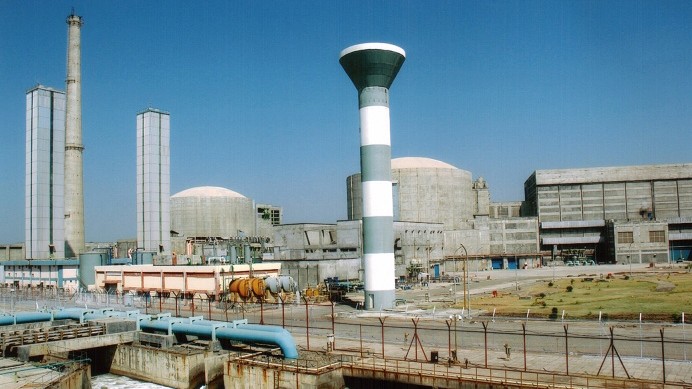
New Delhi: India is making significant strides in expanding its nuclear energy capabilities through the development of innovative small modular reactors (SMRs), led by the Bhabha Atomic Research Centre (BARC). These reactors are designed to meet diverse energy requirements while supporting India’s clean energy and decarbonisation goals.
The Department of Atomic Energy (DAE) has revealed that BARC is actively working on multiple SMR designs, including the 200 MWe Bharat Small Modular Reactor (BSMR-200) and a 55 MWe Small Modular Reactor (SMR-55). Additionally, high-temperature gas-cooled reactors with outputs of up to 5 MWth are under development, aimed at efficient hydrogen production.
SMRs like the BSMR-200 and SMR-55 are intended primarily for captive power supply to energy-intensive industries, such as steel, aluminium, and metal manufacturing, which have historically relied on fossil fuels. By adopting SMRs, these industries can secure reliable electricity while reducing their carbon footprint.
Beyond industrial applications, the modular design allows SMRs to replace retiring fossil fuel plants and support energy transition initiatives. Their compact size also makes them suitable for remote or off-grid regions, enhancing access to reliable electricity in underserved areas.

The high-temperature gas-cooled reactors being developed are particularly noteworthy for their role in hydrogen generation, a key component of India’s emerging hydrogen economy. Clean hydrogen production from nuclear power can play a major role in decarbonising transport and industrial processes.
India’s current nuclear power capacity is approximately 8,780 MW, and projections indicate growth to around 9,480 MW by 2025-26. This growth aligns with India’s long-term objective of achieving 100 GW of nuclear capacity by 2047. SMRs are expected to play a vital role in this expansion due to their scalability, lower capital requirements, and flexibility compared to conventional large reactors.
BARC’s SMR program represents a strategic step toward a nuclear-powered future for India, providing decentralised clean energy, supporting industrial competitiveness, and advancing the country’s net-zero ambitions. These modular reactors are poised to become an integral part of India’s clean energy and hydrogen infrastructure, enhancing both sustainability and energy security.